What is Laravel? (2026)

If you’re involved in building digital products, whether as a founder, product owner, or project manager, you’ve likely heard developers talk about Laravel.
It comes up in discussions about architecture, timelines, or technical decisions, but for anyone not writing code day to day, it can be hard to pin down exactly what it is or why it matters.
This is a clear explanation of Laravel for those working alongside developers.
No jargon. No code. Just a straightforward understanding of what Laravel is, how it works, and why your team might be using it.
First things first: What is Laravel?
Laravel is a framework. More specifically, it’s a PHP framework. PHP is the dependable engine behind many websites, quietly handling logins, forms and data so everything works smoothly behind the scenes.
Imagine you are looking to renovate your kitchen. You could design, cut and create it piece by piece, but that would require patience and time.
Instead, you order a kitchen from a supplier, where you get to pick and choose the design, cupboards and extra features. You still have to assemble it, but it is designed to fit together and comes with instructions.
Laravel is like choosing a premium kitchen brand that not only gives you the parts, but also provides high-quality materials, built-in soft-close drawers, and expert instructions. It saves you from measuring every plank and screwing every hinge from scratch, while still allowing customisation to suit your exact needs.
Why it matters!
Laravel impacts how your product is built, how quickly features can be released, how easily new developers can join the project, and how secure and stable your application is over time.
It’s not a niche tool.
Laravel is trusted by developers, teams, startups, and enterprises worldwide.
When you, as a founder or project manager, are investing in a new website or platform, it is important to understand the developer landscape around the framework or tool. A healthy ecosystem of developers provides competition and choice.
Laravel has a thriving community of developers, agencies, and consultants, which creates healthy competition and drives progression. For agencies like Steadfast Collective, this means constantly refining how we design, develop, and maintain projects. And for businesses, it ensures that choosing Laravel does not mean being tied to a single developer or team forever.
Well-known companies such as Pfizer, BBC, Apple, OpenAi, Xero, Nike, and NASA have chosen to use Laravel as part of their tech stack, so it definitely has the backing and approval of many big-name brands and organisations.
Laravel is especially excellent for complex projects, where you have tools connecting, people logging in and actions happening. Think of a CRM (Customer Relationship Management) system, a social network, or a billing platform.

Ready to start on your project?
We have been developing websites for over a decade. Our team of developers love what they do, and strive to ensure they leave the internet in a better place than they found it.
The history behind Laravel
Taylor Otwell started development, while working at his previous employer, on a new PHP framework in 2010 as a way to speed up web application creation. That project became Laravel (Lar-a-vel), which launched in 2011. It quickly picked up steam and before Taylor knew it, Laravel became a business in its own right.
When Laravel first emerged, PHP frameworks like Zend (launched 2007), CodeIgniter (launched 2006), and Symfony (launched 2005) dominated the space.
Since then, Laravel has evolved, developed and matured, with a large full-time team now behind the open-source platform and the Laravel ecosystem.
There are a few reasons why Laravel became a cult favourite before going on to become the most widely used PHP framework.
Taylor quickly monetised the framework through ebooks and various paid tools. The launch of Laravel Forge in 2014 was a pivotal moment enabling him to work full-time on the framework, giving his full commitment to the platform. A common struggle for open-source founders is juggling both paid work and progression of their software, leading to so-called ‘abandonware’ (software left unmaintained).
Taylor’s attention to detail in the documentation (a technical handbook), code comments (in-code hints and notes), and core code is unrivalled, making for a far better developer experience - this is due to the clarity, and the signposting both documentation and code comments provides.
The 100-hour head start. As Laravel grew, so did its features with authentication, queue, database drivers all creating an instant head start for developers starting a new project which is still a unique focus among PHP frameworks.
The community quickly grew around Laravel, with courses, packages (a package is a pre-written extension for a specific feature or tool), and other tools that all enabled Laravel to not only grow through its own steam, but as a movement.
Laravel 5, released in 2014, marked a major shift with improvements to the code organisation and even more built-in features like scheduled tasks and validation to increase the head start.
As the Laravel ecosystem matured, first-party tools like Nova (control panel), Horizon (queue management), and Telescope (debugging) were introduced.
Laravel Vapor, released in 2019, is a serverless deployment platform that runs on AWS, allowing developers to create auto-scaling infrastructure with just a few clicks.
2020 saw Jetstream, a new starter kit for Laravel introduced, while Livewire and Inertia.js both became integrated into the ecosystem.
Laravel switched to a new release schedule in 2022, with a new major release set for each year.
In 2024, Laravel announced a $57 million Series A investment from Accel, aimed at expanding its capabilities and future ambitions.
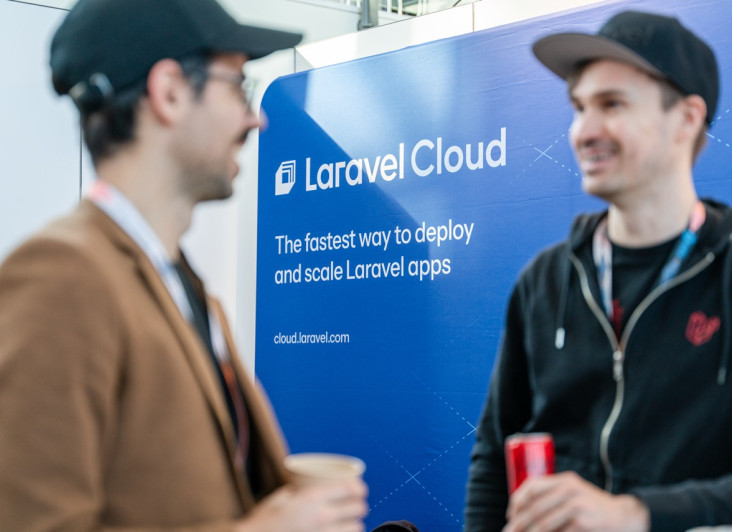
In 2025, Laravel Cloud was released. Earmarked as the easiest and fastest way of putting and keeping your Laravel products online. 2025 also introduced Nightwatch - a first-party monitoring platform to keep an eye on the health of your application, with the deep integration with Laravel we've come to expect offering uniquely useful insights.
What Laravel includes
At a structural level, Laravel includes a clear way to organise an application. It defines how web pages are accessed, how data is handled, and how information is presented to users. This separation of responsibilities keeps projects tidy and makes them easier to understand, even as they grow larger or are passed between teams.
At the heart of the ecosystem is the Laravel framework itself. A standard installation of Laravel would include, but is not limited to:
Routing | How your application functionality is organised into web addresses - important for SEO |
Eloquent | A simple but powerful way to access and filter items from your database in PHP, represented as Eloquent Models. |
Blade templating | Controls the way your application is displayed in the browser |
Authentication and Authorisation | Straightforward ways to identify users and what they are allowed to access in your app. |
Artisan console | Provides tools for managing your application with system commands. |
Middleware | Code which is run on every page load, used a lot for convenience, security and logging |
Database migrations and seeders | Manages your database structure in code |
Validation | Checks data is correct and secure before processing it |
Task scheduling | Allows your application to perform actions at specific times - e.g. weekly reports |
Queues | Runs code in the background so your application interface is fast |
Email and notification system | Alert users when things happen in your application - includes sending emails, text or slack messages and more. |
Caching | Stores data in a special way to make your application load faster |
Localisation | Display your user interface in the language of your users |
File storage integration | Enables your application to work with files whether they are stored within the app or somewhere else. |
Testing tools | Automated tests check your application is working as expected to prevent bugs when making changes or updates. |
What this means for your project
Choosing Laravel, or working with a team that has, is not just a technical preference. It reflects a wider set of priorities: speed, maintainability, reliability, and developer happiness.
Here’s what Laravel offers in practice:
Faster development cycles, with built-in features reducing the need for custom work
Clean, maintainable code, making handovers and scaling easier
Strong security foundations, protecting sensitive data and user information
A global developer community, ensuring your project is future-proof and adaptable
If your platform is being built with Laravel, you’re working with a framework that’s widely adopted, actively maintained, and designed for the demands of modern web development.
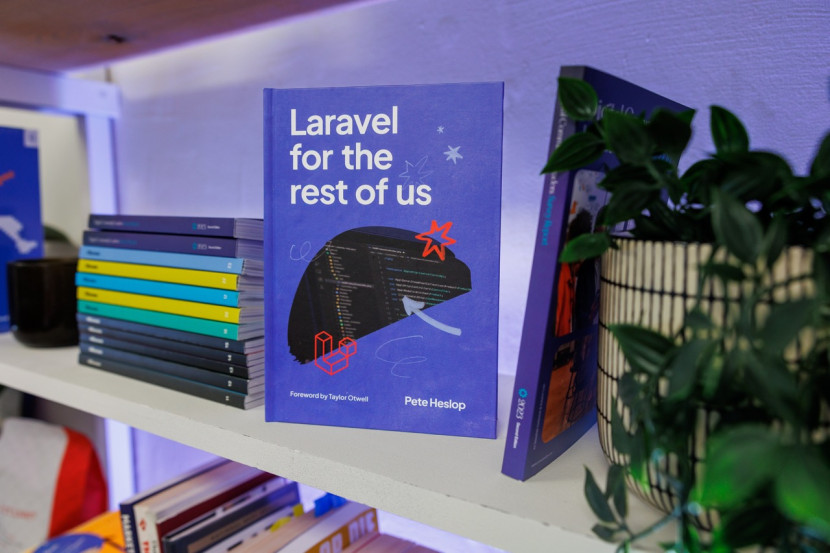
Laravel For The Rest of Us!
Laravel is one of the world’s most popular web frameworks, but to many outside the developer community, it can feel like magic. Laravel for the rest of us makes that magic understandable.
Written for founders, product managers, project leads, and anyone working alongside a development team, this book explains what Laravel is, why teams choose it, and how it powers modern digital platforms.
From open source and security to hosting, APIs, and managing technical teams, Pete Heslop, Managing Director of Steadfast Collective and an official Laravel Partner, offers clear explanations and real-world examples to help you confidently lead Laravel projects.
You can order the book here
More Articles

Laravel Cloud Managed Queues vs Queue Clusters (2026)
Laravel Cloud Managed Queues are now here. Why should you upgrade, and Cloud scales the work for you, so your team ships features instead.

Why change Laravel Agency
Steadfast Collective is a Laravel agency in the UK that designs, builds and scales web platforms for membership organisations, charities and brands.
Laravel Cloud Migration: What Teams Need to Know
Considering a Laravel Cloud migration? Understand the scenarios, risks and benefits before you move, with guidance from Steadfast Collective.