Laravel Cloud Managed Queues vs Queue Clusters (2026)

Queues do the slow, unreliable work in a Laravel application. Sending receipts, generating PDFs, syncing to a CRM, processing a bulk import. Anything slow or unreliable gets pushed onto a queue so your members aren't left staring at a spinner.
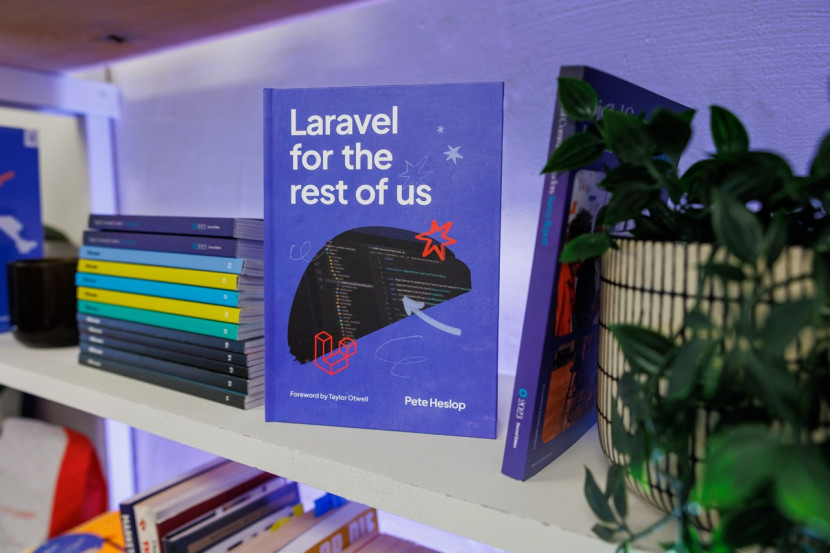
If queues are new to you, our guide to Laravel for the rest of us is a gentle place to start.
What is a Queue?
Queues allow your application to create tasks, which can run independently of a user’s browser and run in the background on the server. For instance; sending an email, processing video or generating reports.
The queue system allows your users to have an instantaneous experience on your platform, while the heavy lifting happens in the background, for example, if a user submits a form that triggers an email to be sent, waiting for the email process to complete could cause the page to load slowly, leading to frustration or confusion. Laravel’s queue system solves this by allowing these longer tasks to be processed in the background, ensuring that users can continue interacting with the application without delay.
Laravel makes it simple for developers to push tasks to a queue, ensuring that time-consuming processes are handled asynchronously. This is particularly useful in situations where your application is expected to scale or handle a high volume of user requests.
Example:
When a search is undertaken on our clients website; Shorefield Holidays, we create a job, which runs in queue. This allows for the complexity of the search to happen on a different server, without causing additional load on the primary website server.
On the same website, we use queues to manage sending email, ensuring that when a batch of emails are sent via the website, the user does not ‘wait’ for them before navigating to the next part of the website, but these can run in the background in an orderly fashion.
Managed Queues vs Queue Cluster
Queue Clusters was one the previous choice for Laravel Cloud customers for queues. Clusters used to make you pick worker sizes and scaling limits, and Managed Queues hand all of that to Cloud.
That suits the spiky work membership organisations deal with, like a once-a-month reminder run to 50,000 members.
No capacity planning. You stop guessing replica counts. A quiet Sunday and a Monday morning renewal run are handled by the same configuration.
Less to monitor. With clusters, you watch the queue and the workers. With Managed Queues, you mostly watch the queue: throughput, failures, and how long jobs wait. The workers become the platform's problem.
Cost that follows the work. Idle capacity is what you pay for with any cluster whether you use it or not. When the platform scales with the work, you stop paying for workers standing around waiting.
Your current Laravel jobs don't need rewriting.
A job that implements ShouldQueue, defines its tries, backoff and timeout, and handles its own failed() method will run on Managed Queues just as it did on a cluster. The standard Laravel queue documentation still applies to everything you write. The change lives in your environment configuration, not your business logic.
Why this matters for membership organisations
We spend most of our time building membership websites and platforms for professional bodies and associations. Their queue patterns are wonderfully predictable, and wonderfully spiky.
Most days, the queue ticks over with a handful of welcome emails and payment confirmations. Then renewal season lands. Thousands of reminders, invoices and CRM syncs, all at once. Then an annual conference opens registration and the same thing happens again.
Queue Clusters could handle that, but only if someone had set the ceiling high enough, and that someone was usually a developer who'd rather be building features members actually see.
We saw the value of getting this right on our rebuild of CRiS for the National Caravan Council, where reliability and scale weren't optional.
That's the promise of Managed Queues, which we've now deployed to multiple applications.
Taking infrastructure chores off developers is a big part of why we build on Laravel. Time spent tuning workers is time not spent improving the member experience.
If you're looking to make the switch to Laravel Cloud, let's chat.
nielsluigjes-06935.jpg)
Switch to Cloud
Looking to switch from AWS, Heroku, or GCP to Laravel Cloud? We've helped organisation just like your save money, and switch to more reliable infrastructure.
More Articles

Laravel vs Django: Which Framework Should You Choose?
Comparing Laravel and Django? See how they stack up on performance, ecosystem and hiring before you choose.

Why B Corp Certification Matters When Choosing a Digital Partner
A B Corp digital agency has had its social and environmental performance checked by B Lab, and it has written a duty to people and the planet into its legal documents.


Why change Laravel Agency
Steadfast Collective is a Laravel agency in the UK that designs, builds and scales web platforms for membership organisations, charities and brands.