The Hidden Cost of Poor Member Data

Your database is lying to you.
I've sat with enough membership teams to know that data hygiene across the industry is a real issue.
A member's email bounces, so a colleague creates a new record. Someone imports a spreadsheet from an event, and half the attendees already exist under a slightly different spelling. A renewal reminder fires to an address the member stopped checking in 2019.
Duplicate records: paying to lose members twice
When a member exists twice in your system, you're fragmenting their engagement history across two ghosts.
One record shows they attended three events last year. The other shows they've done nothing. Your renewal team looks at the wrong one and flags them as disengaged.
The financial impact compounds quickly:
Your engagement scoring is wrong, so your retention flags are wrong
Finance can't reconcile membership numbers against revenue
Staff waste hours every week manually merging records
Marketing General's benchmarking work shows median renewal rates hover around 85%. If duplicates cause you to misread engagement on even 2% of your base, you're potentially losing renewals worth tens of thousands of pounds a year.
For an organisation with 20,000 members at £120 each, a one-point drop in renewals is £24,000 gone. Every single year.
And that's before you count the staff time spent cleaning up after the system rather than serving members.
Missed renewal triggers: the silent churn machine
Most membership platforms I inherit were never designed around renewal logic. They were designed around storing contact details.
A proper renewal engine knows: when the membership expires, when the reminder cadence should start, which channel the member actually responds to, whether they've engaged in the last 90 days, and whether their payment method is about to fail.
When any of those signals are missing or stored in a format your system can't query, the reminder doesn't fire or fires to the wrong person at the wrong time.
Nearly half of lapsed members cite "lack of engagement" as the reason they didn't renew. But here's what that survey stat doesn't tell you. A decent chunk of those lapsed members would have renewed if the reminder had landed properly, on the right channel, at the right moment, with the right message about what they'd actually used that year.
That's not an engagement problem. That's a data problem masquerading as one.
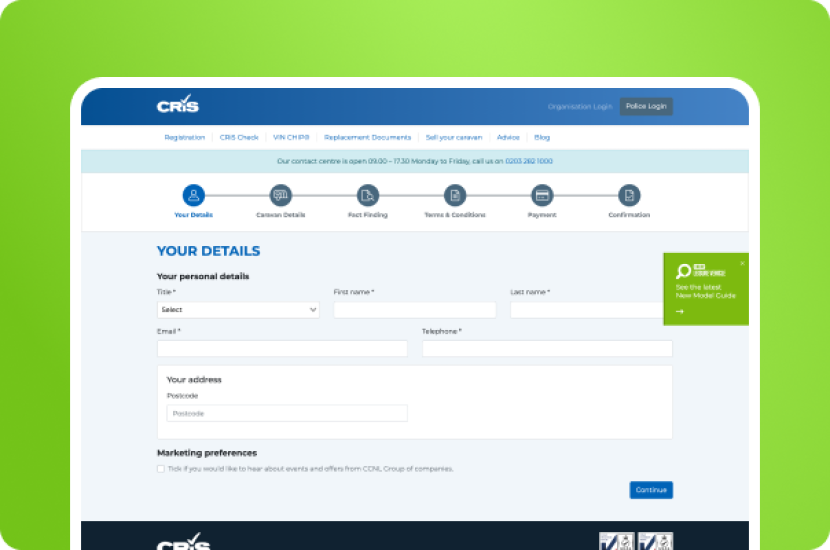
When we rebuilt the platform for NCC CRiS, a huge part of the work was making renewal logic something the team could actually rely on rather than wrestle with. Clean member records, accurate engagement signals, Stripe-driven payment handling that fails gracefully, and renewal flows the team could see and adjust.
Untracked engagement: the invisible asset
Engagement is the single strongest predictor of renewal. We know this. The research is consistent. 51% of associations equate lack of engagement with why members fail to renew.
So why do so many organisations have no reliable way of measuring it?
Because engagement data lives in five different places:
Event attendance in one tool
CPD or learning progress in another
Community or forum activity in a third
Email opens in the ESP
Website behaviour nowhere at all
If those signals never flow into a single member record, you can't score engagement, you can't segment by it, and you can't act on it.
Your most engaged members get the same generic email as the ones who haven't logged in for 18 months. And your board keeps asking "how engaged are our members?" and nobody has a straight answer.
This is where a bespoke membership platform saves you operational costs.
We've built community platforms and member portals on Laravel specifically because the engagement signals need to live together, queryable, reportable, and tied to the member record. Not scattered across SaaS tools that don't talk.
The CRiS project is a good illustration. Consolidating member activity into a single source of truth meant the team could finally see who was using what, how often, and where the gaps were. That's not a vanity metric. That's the foundation for every retention conversation they'll have for the next decade.
Do the maths on fixing it
What's your average member lifetime value? Take annual dues and multiply by average tenure. For many professional bodies, that's £800 to £3,000+ per member.
If cleaner data and better renewal triggers improved your retention by just one percentage point on a 20,000-member base, what's that worth? Often £150,000 to £500,000 a year, recurring.
What would it cost to properly audit, deduplicate, and rebuild the engagement layer? A fraction of that, and it's a one-off with ongoing returns.
The Marketing General 2024 report consistently shows that organisations investing in data and digital infrastructure see measurably better retention. The Higher Logic research on online community participation shows 88% of members feel access to an online community improves their experience, but only when the platform actually connects to the rest of their member data.
The ROI case isn't marginal.
Where to start
You don't need to rebuild everything on Monday. But you do need to stop pretending the problem isn't there.
Start here:
Run a duplicate audit this month. Count them. Put a number on the mess
Map your renewal trigger logic on a whiteboard. Find where it breaks
List every place engagement data lives. Count the systems. Note which ones talk to each other
Once you can see the shape of it, the business case for fixing it writes itself.
Poor member data doesn't just cost you money. It costs you the ability to make good decisions about your members.
If you're wrestling with this and want a second opinion on what's fixable and what isn't, get in touch. Happy to take a look.
More Articles

WordPress vs Statamic for Membership Websites
Statamic or WordPress for your membership website? A plain-English comparison covering security, cost, and member experience for non-technical leaders.

Why Statamic for Membership Platform
Why Statamic works brilliantly as a membership platform for large organisations. Flexible, secure, and built on Laravel.
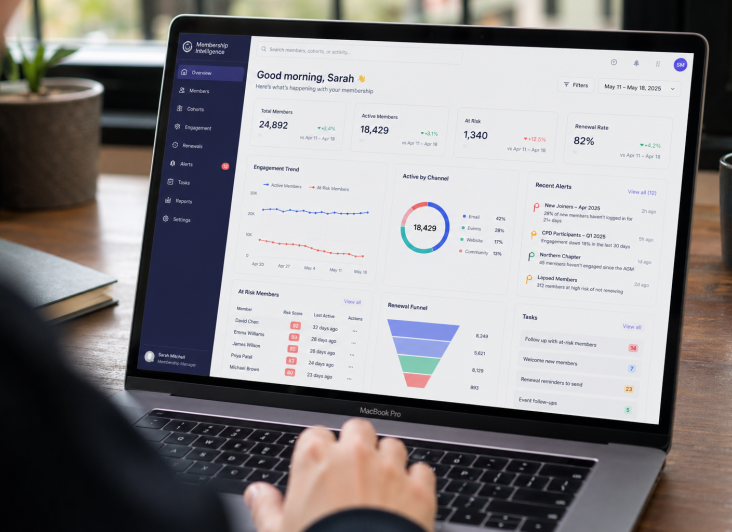
What Should a Membership Dashboard Include?
Why do most membership platforms still treat engagement data as something you review in a quarterly report, rather than something the system itself is watching in real time?