Laravel Cloud: What It Means for Your Business
Laravel Cloud has arrived, and it's worth paying attention to.
If you're a founder, CTO, or product owner running custom software built on Laravel, this is one of those shifts that sounds purely technical but has real implications for your budget, your team's speed, and how your application scales over the next few years.
As an official Laravel Premier partner and one of the UK's leading Laravel agencies, we've already migrated client applications to Laravel Cloud and run the process ourselves on internal projects.
Here's what we've learned, and what you need to know.
What is Laravel Cloud?
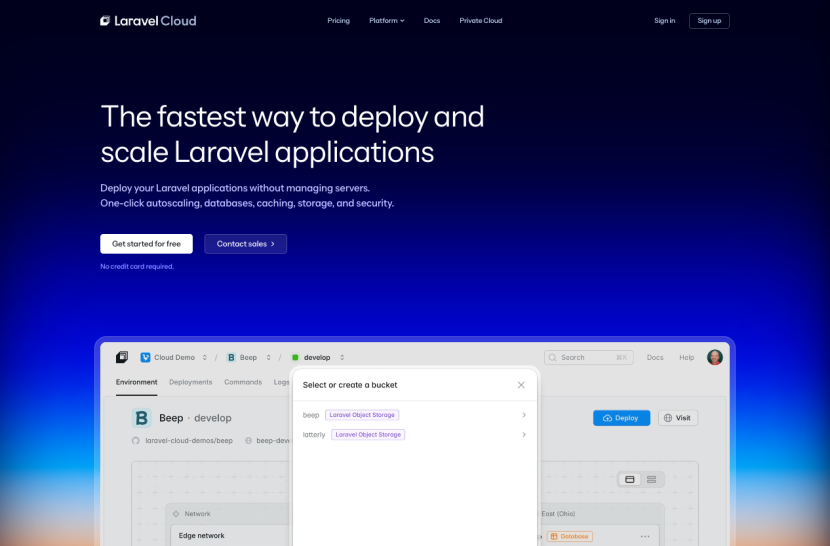
Laravel Cloud is a fully managed hosting platform built by the Laravel team themselves.
Think of it as infrastructure designed specifically for Laravel applications, rather than a general-purpose server you have to configure and maintain.
Until now, most Laravel applications have been hosted on services like Laravel Forge (which provisions servers on providers like DigitalOcean or AWS) or on bespoke server setups managed by your development team. These approaches work, but they require ongoing server management: security patches, scaling configuration, SSL certificates, database maintenance, and all the invisible work that keeps an application running.
Laravel Cloud removes most of that overhead. It handles deployment, scaling, SSL, database management, and environment configuration out of the box. Your development team can focus on building features and improving your product instead of babysitting infrastructure.
Taylor Otwell, Laravel's creator, has described it as the natural next step for the framework's ecosystem. The official Laravel Cloud documentation covers the technical detail, but the practical summary is this: it's hosting that understands Laravel natively, so the gap between writing code and running it in production shrinks considerably.
Why should non-technical leaders care?
If you're not the one writing code, you might wonder why a hosting change matters. Here's the thing: infrastructure decisions directly affect three areas that every founder and product owner cares about.
Cost predictability
Traditional server setups often involve paying for capacity you don't use, or scrambling to scale when traffic spikes. Laravel Cloud's architecture is built around scaling to demand, which means you're paying closer to what you actually use. For membership organisations or community platforms with seasonal traffic patterns (annual renewals, event launches, conference sign-ups), this is a meaningful change.
Developer velocity
When your team spends less time on server configuration and deployment pipelines, they spend more time shipping features. A study by Stripe found that developers spend over 17 hours per week on maintenance and technical debt rather than building new things. Anything that reduces that number puts your investment to better use.
Reduced risk
Managed platforms handle security updates, backups, and failover automatically. That's one less category of "what if" to worry about. For organisations running membership websites or handling sensitive member data, this layer of confidence matters.
How does a Laravel Cloud migration actually work?
Migration sounds dramatic, but with proper planning it's closer to a structured move than a risky leap. At Steadfast Collective, we've developed a clear process for moving existing Laravel applications onto Laravel Cloud.
Assessment and compatibility check
Not every application is identical. The first step is reviewing your current setup: what version of Laravel you're running, how your database is configured, what third-party services are integrated (payment gateways like Stripe Connect, email providers, file storage), and whether there are any custom server configurations that need translating.
Most modern Laravel applications (version 10 and above) are straightforward to migrate. Older applications may need some updates first, which is often worthwhile anyway for security and performance reasons.
Environment configuration
Laravel Cloud uses its own environment management. Your team (or ours) will set up environment variables, database connections, queue workers, and scheduled tasks within the Cloud dashboard. If you've been using Laravel Forge, much of this will feel familiar but simpler.
Deployment and testing
We run the migrated application in a staging environment on Laravel Cloud before touching production. This is where we catch edge cases: a queue that behaves differently, a file storage path that needs updating, or a cron job that needs reconfiguring. Once everything passes, the production switch is typically a brief, planned cutover.
DNS and go-live
The final step is pointing your domain to Laravel Cloud. Downtime during this process is minimal (often zero with proper DNS management). SSL certificates are provisioned automatically.
The whole process, from assessment to go-live, typically takes between one and three weeks depending on the complexity of your application.
What we've learned from early migrations
We've already moved several projects to Laravel Cloud, both client applications and our own internal tools.
The deployment speed is noticeably faster. What used to take several minutes on a traditional Forge setup now completes in under a minute in most cases. That sounds small, but when your team deploys multiple times a day, those minutes add up.
We tested this with a web application that handles periodic traffic surges, and Laravel Cloud handled the load without any manual intervention. Previously, we'd have pre-scaled the server in anticipation.

Is Laravel Cloud right for every project?
If your application has very specific infrastructure requirements (custom kernel modules, non-standard database engines, or highly regulated environments that mandate specific hosting providers), then a fully managed platform may not offer the flexibility you need.
For the vast majority of custom Laravel applications we build and maintain, including membership platforms, community tools, internal business applications, and e-commerce integrations, Laravel Cloud is an excellent fit.
What this means for your existing Laravel application
If you're running a Laravel application today, you don't need to migrate tomorrow. But it's worth having the conversation now, particularly if any of these apply to you:
Your hosting costs feel disproportionate to your traffic
Your team spends significant time on server maintenance rather than product development
You're planning a scaling phase (launching to new markets, expecting membership growth, adding new features)
Your current setup relies on a single developer who "knows how the server works"
That last point is more common than you'd think. Laravel Cloud reduces the bus factor by standardising infrastructure in a way that any experienced Laravel developer can work with.
Working with a Laravel agency on your migration
At Steadfast Collective, we offer Laravel Cloud migration as part of our website care and growth services. We'll assess your current setup, plan the migration, execute it, and make sure everything runs smoothly on the other side.
Ready to start on your project?
We have been developing websites for over a decade. Our team of developers love what they do, and strive to ensure they leave the internet in a better place than they found it.
Frequently asked questions
What is Laravel Cloud and how is it different from Laravel Forge?
Laravel Cloud is a fully managed hosting platform built specifically for Laravel applications. Unlike Forge, which provisions and helps manage servers on third-party providers like DigitalOcean or AWS, Laravel Cloud handles the entire infrastructure layer including automatic scaling, SSL, and database management without requiring you to manage servers directly.
How long does it take to migrate a Laravel application to Laravel Cloud?
Most migrations take between one and three weeks depending on the complexity of the application. This includes assessment, environment configuration, staging tests, and the production cutover. Simple applications can be migrated faster, while those with complex integrations may take longer.
Will migrating to Laravel Cloud cause downtime for my application?
With proper planning, downtime during migration is minimal and often zero. The production switch involves a DNS cutover that can be managed to avoid any interruption to your users. Staging environments are used to test everything before the live switch.
Do I need to update my Laravel version before migrating to Laravel Cloud?
Applications running Laravel 10 and above are generally straightforward to migrate. Older versions may need updating first, which is often worthwhile for security and performance improvements regardless of the hosting change.
Is Laravel Cloud suitable for membership websites and community platforms?
Yes. Laravel Cloud is well suited to membership websites and community platforms, particularly those with variable traffic patterns. Its automatic scaling handles traffic surges during events like annual renewals or conference sign-ups without manual server intervention.
How much does Laravel Cloud cost compared to traditional hosting?
Laravel Cloud uses usage-based pricing, so you pay closer to what you actually consume rather than maintaining fixed server capacity. For many applications, particularly those with variable traffic, this can be more cost-effective than traditional hosting setups.
Can a Laravel agency handle the migration for me?
Yes. A specialist Laravel agency like Steadfast Collective can assess your current setup, plan and execute the migration, and provide ongoing support afterwards. This is particularly helpful if your internal team is focused on feature development or lacks specific infrastructure experience.
If you're considering a move to Laravel Cloud, or you'd just like to understand whether it makes sense for your application, we'd love to chat. Get in touch or request a quote.
More Articles

Why change Laravel Agency
Steadfast Collective is a Laravel agency in the UK that designs, builds and scales web platforms for membership organisations, charities and brands.
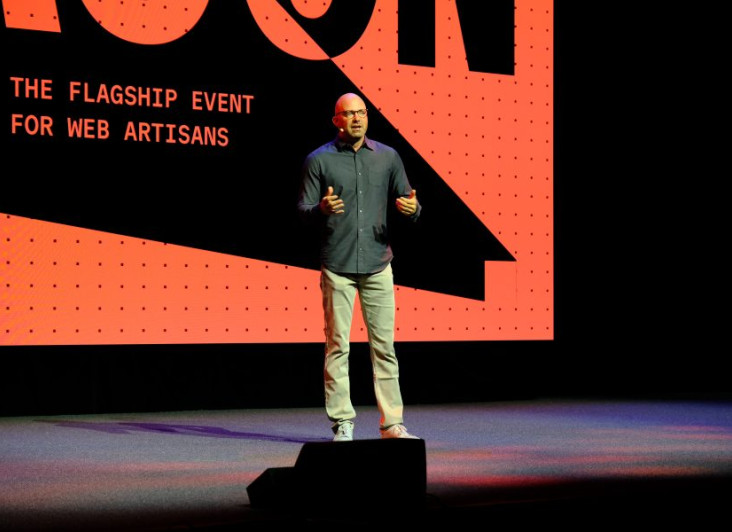
Laravel Announcements from Laracon US 2026
The headline releases centred on tighter tooling, better performance defaults, and first-class support for AI, all shipped in a way that protects existing projects.
Why Statamic for Membership Platform
Why Statamic works brilliantly as a membership platform for large organisations. Flexible, secure, and built on Laravel.