Laravel vs Django: Which Framework Should You Choose?

In the Laravel vs Django decision, both frameworks will carry a serious web application. The better choice depends on what your platform does, who will maintain it, and what the rest of your stack is written in. Laravel suits membership platforms, portals and products that need to ship quickly. Django suits teams already working in Python, especially where data science or machine learning sits close to the product.
So which one should you pick?
Start with your team and your roadmap, not the benchmarks.
Key takeaways
Laravel (PHP, launched 2011) and Django (Python, public release 2005) are both mature, open-source and actively maintained.
For typical web applications, the database, caching and queues set performance far more than the choice between PHP and Python does.
Laravel ships first-party tools for queues, hosting and deployment, such as Horizon, Forge and Laravel Cloud. Django leans on a wide Python ecosystem, including Django REST Framework and Celery.
Django is the stronger fit when your product depends on Python data or machine learning libraries.
Laravel is the stronger fit for membership websites, portals and customer-facing platforms where speed of delivery matters most.
Laravel and Django at a glance
Both are frameworks. A framework is a ready-made kit for building an application. Logins, database access, forms and security are already there, so your developers start from a working base instead of from nothing.
Laravel is written in PHP. Taylor Otwell started it in 2011, and it has grown into the most widely used PHP framework.
If it's new to you, our practical guide to Laravel covers the basics without code.
Django is written in Python. It grew out of a newsroom and was released publicly in 2005. It describes itself as "batteries included", and it means it: an admin interface, an ORM (the layer that talks to your database), authentication and migrations all come out of the box. The Django documentation is famously thorough, and the project is looked after by the Django Software Foundation.
Both follow a similar pattern for organising code. Both take security seriously by default, with protection against common attacks built in. Both have long track records in production.
The differences show up in the details: the language, the tooling around each framework, and the people you can hire to work on it. For a wider view of how these two sit against other options, see where Laravel sits among other frameworks.
Performance and scalability
You can find benchmarks that crown either framework, depending on how the test is set up. In real applications, the framework is rarely the bottleneck. Slow database queries, missing caches and heavy work done while the user waits cause far more pain than PHP versus Python.
Both frameworks scale when those basics are handled well. Django runs some very large sites, Instagram being the example most people know. Laravel powers everything from small portals to high-traffic platforms.
Where they differ is in how much of the scaling toolkit is first-party.
Laravel ships its own answers. Queues run slow work in the background, Horizon monitors them, Octane keeps the application in memory between requests for extra speed, and Laravel Cloud handles hosting and autoscaling.
We've written about what Laravel Cloud means for your business if you want the detail.
Django has added asynchronous support over recent releases, and background work has typically run through Celery, a separate Python project. It works well, but it's another piece your team chooses, configures and maintains.
Ecosystem and community
An ecosystem is everything around a framework: packages, hosting tools, courses, agencies and the people who contribute.
Laravel's ecosystem is unusually joined up. Forge, Cloud, Nova, Horizon, Telescope, Livewire and Inertia are either first-party or tightly integrated. That means fewer decisions at the start of a project and fewer awkward seams between tools later. The Laravel documentation covers most of it in one place.
Django's strength is Python itself.
Python has one of the largest package ecosystems of any language, and it dominates data science, analytics and machine learning. If your product needs to run models, crunch datasets or plug into research tools, Django puts all of that within easy reach. Django REST Framework is also a very mature choice for building APIs.
Both communities are active and welcoming. Laravel's feels more commercial and product-focused, with conferences, paid tools and a large agency network. Django's feels closer to the open-source foundation model, with long-term support releases that are maintained for around three years.
For buyers, a healthy ecosystem means choice. You're not tied to a single developer or agency forever, whichever you pick.
Learning curve and hiring
Laravel is often praised for developer experience. Its syntax reads cleanly, conventions are clear, and the documentation holds your hand through most common tasks. Tools like Eloquent, Laravel's database layer, make everyday work quick to pick up.
Django is also approachable, particularly for anyone who already knows Python. Python is widely taught in universities and schools, so many junior developers arrive knowing the language, if not the framework.
Hiring depends on where you are and what else you do.
PHP developers are plentiful, and Laravel is the framework many of them reach for first. Python developers are also plentiful, but a good share of them work in data, scripting or machine learning rather than web applications. A strong Python engineer isn't automatically a strong Django web developer.
The practical question is simpler than the language war. Who will look after this platform in three years, and what do they already know?
If your internal team writes Python every day, that's a strong argument for Django. If you're working with an agency or hiring for web product work, Laravel's talent pool and agency network make it easier to find help.
When to choose Laravel
Laravel fits best when the product is the website or platform itself. Think membership portals, booking systems, billing, video consultation tools, internal CRMs and community platforms.
It's a good choice when:
You want to ship features quickly and keep shipping them
You need queues, scheduling, payments and notifications without assembling them yourself
You'd like hosting and deployment handled within the same ecosystem
You want a large pool of agencies and developers to choose from
That's the work we do most. Our rebuild of CRiS for the National Caravan Council needed a secure, scalable platform that the sector could rely on, and Laravel gave us the foundations to deliver it.

When to choose Django
Django is the better call in some situations, and it's worth saying so plainly.
Choose Django when your team already works in Python and has no appetite for a second language. Choose it when machine learning, analytics or scientific computing is central to what the product does, not a side feature. And choose it when Django's built-in admin covers most of your back-office needs, since it can save real time on internal tooling.
It's also a sensible pick for organisations with a research or data team that wants to contribute directly to the application code.
Among the Laravel alternatives, Django is one of the most credible. It isn't the underdog in this comparison. If you're weighing up the best backend framework more broadly, we've looked at which web development framework is best across a wider field.
Our take
We're an official Laravel Partner, so you know where we lean.
But Django vs Laravel isn't a contest with a loser. Both are mature, secure and capable of scaling. The better framework is the one that matches your team, your roadmap and the people you can hire to look after it.
For most membership organisations, associations and product teams building customer-facing platforms, we'd pick Laravel. It gets you to a working product faster, and it keeps the tooling in one family as you grow.
If your product lives and breathes Python data work, Django will likely serve you better.
If you'd like a second opinion on your Laravel vs Django decision, our UK Laravel agency team would be happy to talk it through with you.

Ready to start on your project?
We have been developing websites for over a decade. Our team of developers love what they do, and strive to ensure they leave the internet in a better place than they found it.
More Articles

Why change Laravel Agency
Steadfast Collective is a Laravel agency in the UK that designs, builds and scales web platforms for membership organisations, charities and brands.
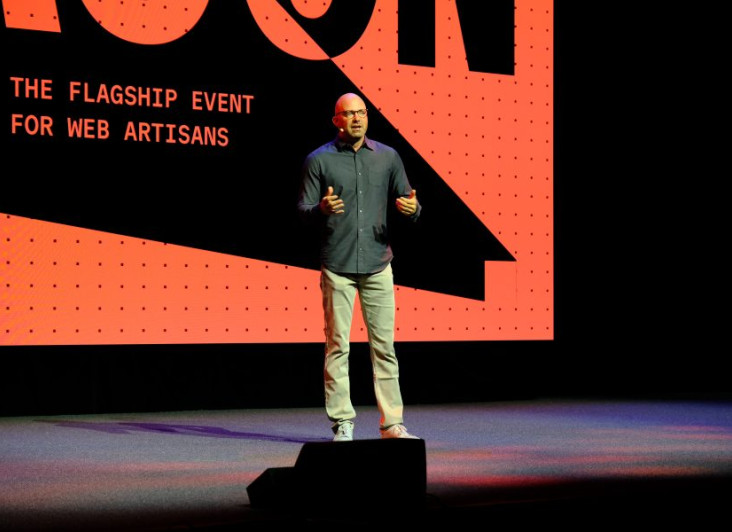
Laravel Announcements from Laracon US 2026
The headline releases centred on tighter tooling, better performance defaults, and first-class support for AI, all shipped in a way that protects existing projects.

Why Statamic for Membership Platform
Why Statamic works brilliantly as a membership platform for large organisations. Flexible, secure, and built on Laravel.